SaaS · Asterisk · Node.js
Building a VoIP route-testing SaaS with Asterisk, Node.js and React
By Rohan Mondal · · 1 min read
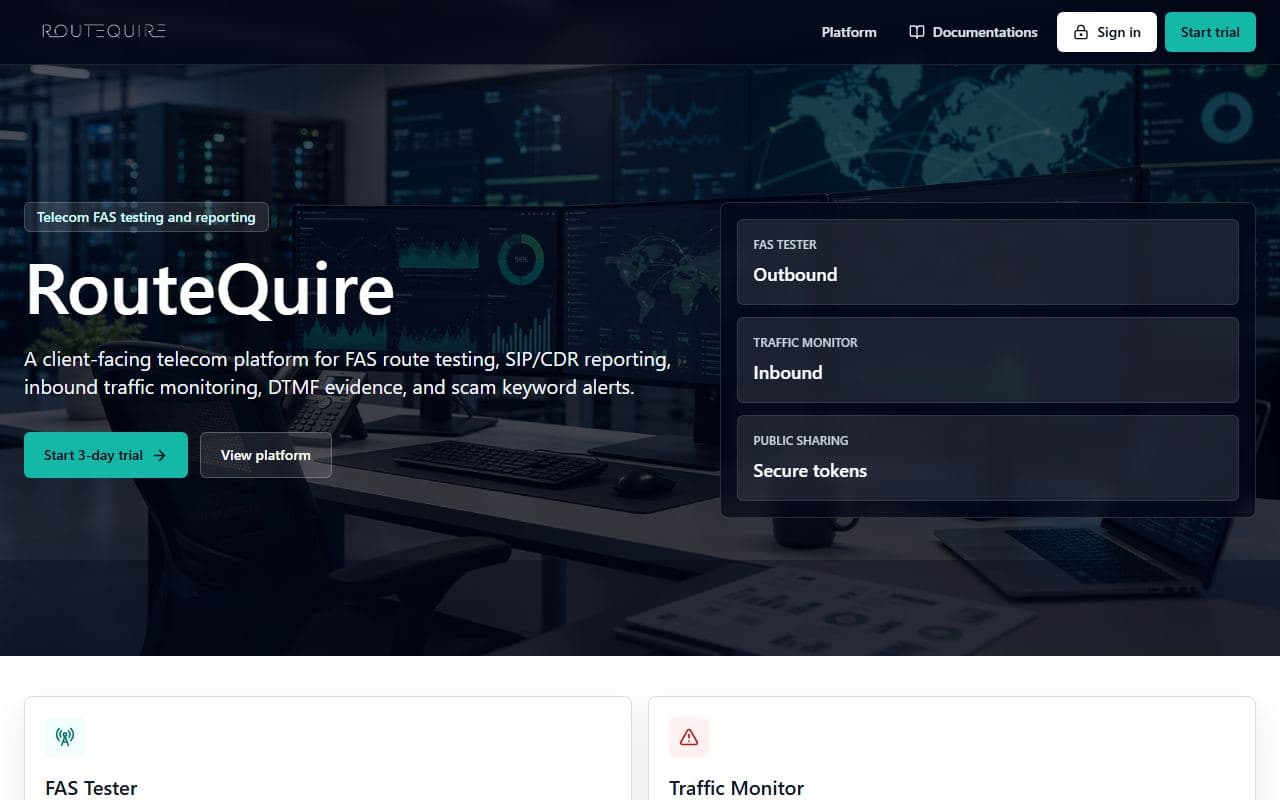
VoIP carriers lose money to poor routes and false answer supervision, where a route pretends a call was answered so it can bill for it. The evidence is buried in Asterisk logs and SIP traces that nobody has time to read. RouteQuire turns that evidence into something a carrier can act on and take back to its vendors.
Test calls on a schedule
The core is an Express API on PostgreSQL that schedules test batches: caller IDs, destinations, routes, pacing and retries. When a batch runs, calls are originated through the Asterisk Manager Interface, so they go out over real telephony routes exactly as customer calls would.
Capturing the evidence
Every call leaves a trail. Dialplan webhooks feed CDR records, SIP traces and hangup causes back into the API, so each test result is backed by what actually happened on the wire, not just whether the call connected.
Dashboards people actually read
A React dashboard turns thousands of call records into KPIs, trend charts and route comparisons, with drill-downs into SIP errors and individual run details. Reports can be shared through token-based public links and emailed as CSV, so a carrier can send proof to a vendor without giving them an account.
A second product: Traffic Monitor
Alongside route testing, a separate Traffic Monitor transcribes inbound sample calls locally and raises alerts on scam keywords and DTMF patterns, helping carriers spot abusive traffic early.
Everything a SaaS needs
- Sign-up, email verification, trials and Stripe-ready subscriptions
- JWT authentication, user roles and audit logs
- Support tickets and recording-retention rules
- An Android app built from the same React code with Capacitor
- Docker Compose deployment for self-hosting
Related services: Mobile App Development · Web App & SaaS Development
Want something like this built?
Share a few details and within 24 hours I'll send ideas, a timeline and a free, fixed quote.